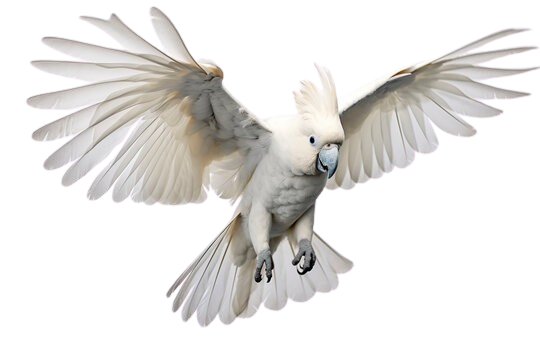
Are cockatoos easy to train
Are cockatoos easy to train? Generally, yes—but “easy” depends on the individual bird, the behavior you are teaching, and how patient you are willing to be. Cockatoos are intelligent, observant parrots that can learn routines, step-up commands, target training, simple tricks, and household behaviors. The tricky part is that intelligence does not always mean cooperation. A cockatoo may understand exactly what you want and still decide it has something better to do.
Are Cockatoos Easy to Train at Home?
For an experienced bird owner, cockatoo training can be very rewarding. For a first-time owner, it can sometimes feel confusing during the first few weeks.
The reason is simple: cockatoos are not passive pets. They notice things. They learn patterns, recognize people, remember routines, and quickly discover which behaviors get attention. If you laugh when your cockatoo throws something from the table, for example, you may accidentally teach it that throwing things is an excellent way to start a conversation.
I always recommend beginning with everyday manners rather than complicated tricks. Teaching a bird to step onto your hand, return to its perch, accept handling, and move calmly between locations is much more useful than immediately trying to teach five different tricks.
Once those basics are established, training becomes considerably easier.
Why Cockatoo Training Can Be Challenging
The same intelligence that makes cockatoos fascinating can make them stubborn.
A cockatoo may learn a command quickly but decide not to respond every time. This does not necessarily mean the bird has forgotten the behavior. Birds have moods, preferences, distractions, and moments when they simply are not interested.
That is where owners sometimes make a mistake. They repeat the command louder and louder, assuming the bird needs more pressure. Usually, that makes the situation worse.
Calm repetition is better.
Cockatoos also need substantial social interaction and mental stimulation. If a bird is bored, training can turn into attention-seeking behavior rather quickly. Chewing, screaming, climbing, throwing objects, or deliberately knocking things down may become more interesting than whatever lesson you planned.
How to Start Training a Cockatoo
1. Build Trust First
Before asking a cockatoo to perform behaviors, establish a comfortable relationship.
Spend time near the bird. Speak calmly. Offer appropriate treats without forcing contact. Let the cockatoo observe you during ordinary household activities.
If the bird is nervous about hands, do not rush straight into step-up training. Work gradually. A cockatoo that feels safe is much easier to teach than one that feels threatened.
2. Teach the Step-Up Command
The step-up behavior is one of the most useful things a companion cockatoo can learn.
Use a consistent verbal cue and present your hand or a suitable perch calmly. When the bird responds appropriately, immediately reinforce the behavior with praise or a small reward.
At first, even placing one foot on your hand can be worth acknowledging. Training is built from small successes.
3. Keep Sessions Short
I prefer short training sessions, particularly with a young or easily distracted bird. Five to ten focused minutes can be enough.
If the cockatoo is becoming frustrated, walking away, biting the training object, or losing interest, finish on an easy behavior rather than forcing another repetition.
Ending while things are going well can make the next session much easier.
Positive Reinforcement Works Well
Positive reinforcement is one of the most useful approaches for teaching companion parrots.
When your cockatoo performs the behavior you want, provide something meaningful immediately. Depending on the individual bird, that could be a tiny food reward, enthusiastic praise, attention, or access to a preferred activity.
The reward does not need to be large. In fact, during training, small pieces of an appropriate food can be more practical than giving a substantial portion each time.
Timing matters. The bird should be able to connect the reward with the behavior.
What Can Cockatoos Learn?
Once basic trust and cooperation are established, there is quite a lot you can teach.
A cockatoo can potentially learn to:
- Step onto a hand or perch
- Step back off safely
- Come when called over a short distance
- Touch a target object
- Return to its cage or play stand
- Accept basic handling
- Enter a carrier
- Follow simple household routines
- Identify familiar objects
- Perform simple tricks
- Respond to verbal cues
- Remain calm during ordinary activities
Some birds learn these behaviors surprisingly quickly. Others need considerably more repetition. I would not compare two cockatoos too closely because temperament can make such a difference.
Training Cockatoos Not to Bite
Biting is one of the subjects new cockatoo owners worry about most.
The first thing to understand is that a bite can have different causes. Fear, excitement, overstimulation, territorial behavior, frustration, hormonal behavior, illness, or simply learning that biting makes a hand disappear can all contribute.
Punishment is not a good foundation for solving the problem. Instead, look at what happened immediately before the bite.
Was the bird being touched somewhere it disliked? Had the interaction gone on too long? Was it guarding a particular location? Were you asking for a step-up when the bird was already signaling that it wanted space?
Learning to read those early signals is part of training too.
A Practical Cockatoo Training Routine
A simple routine might look like this:
Morning: Spend a few minutes calmly interacting with your cockatoo and reinforce a familiar behavior.
Afternoon: Practice one skill, such as step-up or target touching, for several minutes.
Evening: Use normal household interaction to reinforce calm behavior and routine cues.
You do not need to turn the entire day into a training program. In fact, I think that would make living with a parrot unnecessarily complicated. Everyday interactions are training opportunities as well.
Choosing a Cockatoo With Training in Mind
If you are considering purchasing or adopting a cockatoo, ask about the individual bird’s socialization and current behavior rather than assuming every bird of a particular species will behave identically.
A well-socialized bird may already be familiar with people, hands, household sounds, basic handling, and cage routines. That gives a new owner a useful starting point.
If you are researching cockatoos through Buy Cockatiels or speaking with Mr. Parrot, focus on the bird’s temperament, history, care requirements, and current behavior—not simply whether someone describes it as “easy to train.”
Remember, cockatoos are demanding companion parrots. Their intelligence is only one part of the commitment. They also need appropriate nutrition, enrichment, safe housing, social interaction, veterinary care, and a household prepared for their considerable noise and long lifespan.
Conclusion
Are cockatoos easy to train? They can be, particularly when training begins with trust and uses consistent positive reinforcement. But these intelligent parrots are not machines that respond perfectly on command every time.
Some days your cockatoo may learn something in minutes. Another day, it may stare at you as though the lesson has never happened before. That is normal enough.
Be patient, keep sessions manageCockatoos can learn effectively with patient, consistent training, but they are not necessarily easy pets for inexperienced owners. Their intelligence, strong personalities, loud vocalizations, social needs, and potential for challenging behaviors mean that new owners should be prepared to learn alongside the bird. Starting with trust, basic handling, positive reinforcement, and practical household behaviors is usually the best approach.able, reward the behaviors you want, and learn to understand your bird’s body language. In my view, the best cockatoo training is not about creating a bird that performs tricks on demand. It is about building a companion that understands your routines and feels comfortable cooperating with you.
Frequently Asked Question
Are cockatoos easy to train for first-time bird owners?

Cockatoos can learn effectively with patient, consistent training, but they are not necessarily easy pets for inexperienced owners. Their intelligence, strong personalities, loud vocalizations, social needs, and potential for challenging behaviors mean that new owners should be prepared to learn alongside the bird. Starting with trust, basic handling, positive reinforcement, and practical household behaviors is usually the best approach.