

Description
Cockatoos in Connecticut
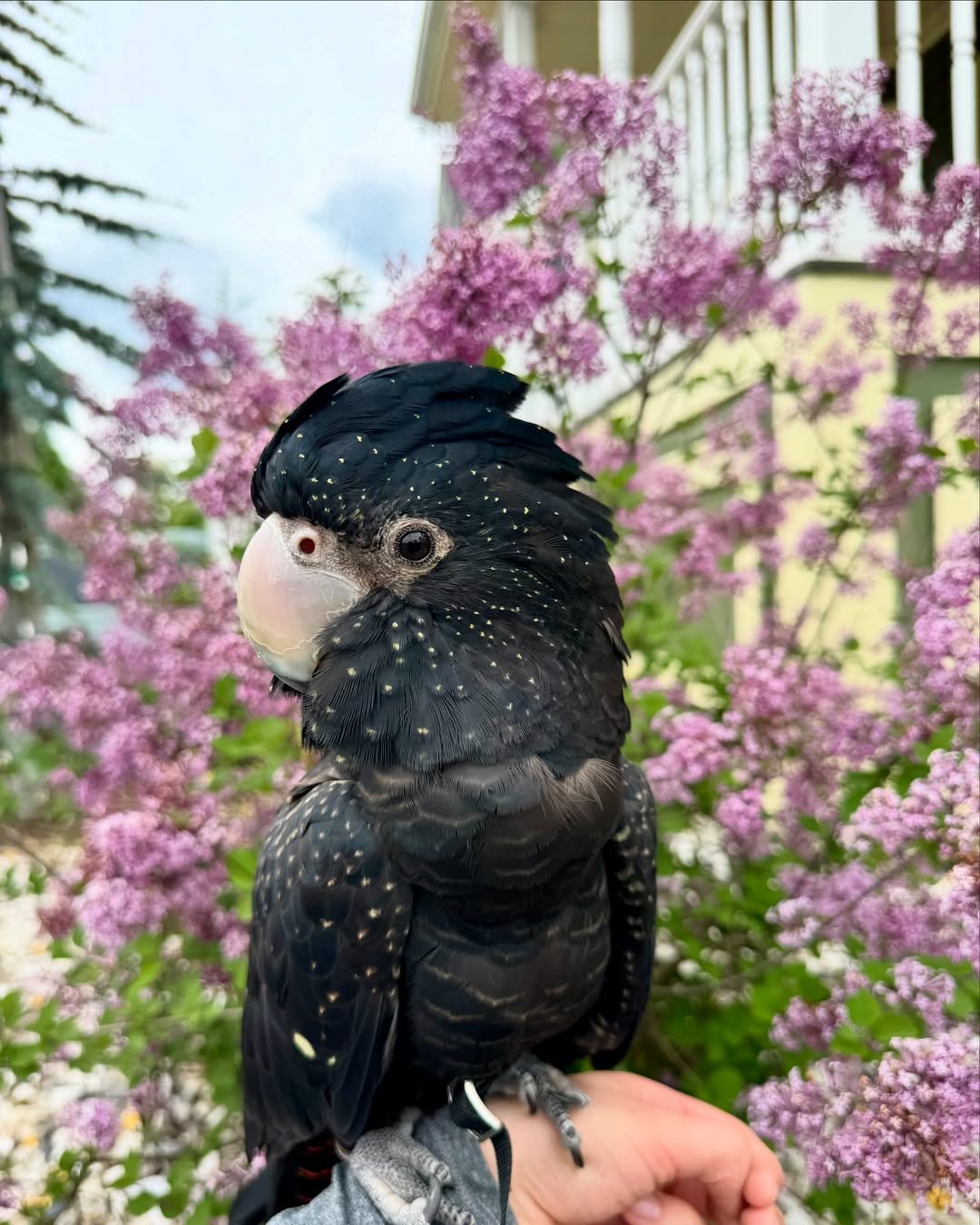
A Distinctive Black Cockatoo
Cockatoos in Connecticut searches often come from people looking for an intelligent, impressive companion bird, and Toby certainly has the appearance that catches attention. He is described as a male Carnaby’s Black-Cockatoo, a species recognized for its dark plumage, contrasting white tail panels, pale cheek patches, and substantial bill.
Carnaby’s Black-Cockatoos are native to southwestern Australia rather than Connecticut. They are social birds and naturally occur in pairs, smaller groups, and larger flocks. Their natural diet includes seeds and other plant foods, with their environment strongly influencing what they forage for.
For a prospective owner, the important question is not simply whether a black cockatoo is attractive. A bird this specialized needs an owner prepared for substantial daily care, safe enrichment, appropriate housing, regular avian veterinary attention, and the long-term responsibility that comes with keeping a large parrot.
There is another point I would want every serious buyer to understand before proceeding: Carnaby’s Black-Cockatoo is classified as endangered. Habitat loss, declining food resources, nesting-hollow shortages, and other pressures have contributed to its decline.
That conservation status makes documentation especially important. Before arranging a transfer, prospective owners should verify the bird’s identity, lawful origin, ownership records, and all federal, state, and local requirements that apply to the particular bird and transaction. I would not recommend sending money for a rare bird without first establishing those details.
What to Expect From Toby
Toby’s species is especially recognizable by its long, dark appearance and contrasting white areas on the tail. Carnaby’s and Baudin’s Black-Cockatoos can look similar, so accurate identification matters when evaluating an individual bird. Current taxonomy recognizes Carnaby’s Black-Cockatoo as Zanda latirostris.
A prospective home should also be prepared for the normal realities of a large cockatoo: powerful chewing, vocalization, a need for mental stimulation, and considerable interaction. These are not birds I would place simply because someone likes their appearance. The better match is an experienced keeper who has considered the bird’s daily routine and can provide appropriate care for many years.
For anyone considering Cockatoos in Connecticut, Toby should therefore be approached as a serious companion-bird commitment, with suitability and legal documentation checked before any transfer is contemplated.
Responsible Placement Comes First
With an endangered species, responsible placement has to mean more than advertising a beautiful bird. The prospective owner should receive clear information about Toby’s identity, history, health documentation, diet, behavior, and existing care routine, while applicable wildlife regulations should be confirmed independently before a transaction.
My advice is simple: take your time, ask questions, inspect the documentation, and make sure the bird’s legal status is clear. A rare cockatoo deserves a home chosen for the right reasons—not a rushed purchase based on appearance alone.






Ignatius Jones –
Clean documentation, secure shipping, and a very healthy Palm Cockatoo. The bird settled into his new aviary setup instantly. It is refreshing to buy from a breeder prioritizing animal welfare.